Nine Principles of Human Communication
August 23, 2017 Leave a comment
“Generally, when verbal and non-verbal messages contradict each other, people tend to believe the non-verbal more than the verbal messages”

courtesy of De Gruyter publishing
In my previous blog, I looked at 7 Myths of Human Communication, and how they relate to leadership & management. In this blog, I will focus on 9 Principles that underpin effective communication.
The source of information for both of these blogs is an excellent book that I have recently read called “New Horizons in Patient Safety: Understanding Communication by, Hannawa, Wu & Juhasz (published by De Gruyter).
These principles remind us just how difficult it is to achieve a shared understanding with another person. One has to wonder if we ever really understand what is intended by another person.
Principle 1: Communication varies between thought, symbol and referent
According to Annegret Hannawa, human communication is “fundamentally an interactive meaning-making process”. Put simply, we use the joint creation and interpretation of symbols (words, gesture, images etc) to try to achieve shared understanding. So, our thoughts are encoded into symbols and behaviours (which have no intrinsic meaning of their own). This leads to the first challenge of “making meaning”, as there needs to be enough “common ground” for both parties to achieve a shared understanding.
Principle 2: Communication is a non-summative process
“Human communication is an interpersonal process that involves much more than the mere sum of its components” (Hannawa).
The assignment of symbols happens within an individual, but the meaning-making process (i.e. communication) happens between people. Because of this, communication cannot “breakdown” as it was not guaranteed in the first place. However, it can malfunction and the wrong meaning can be attributed to message being transmitted.
Principle 3: Communication is functional
Communication works best when it is purely factual but the nature of human relationships is such that often people are not interested in communicating purely factual information. The introduction of humour, sarcasm, persuasion etc. makes it more challenging for a true “shared meaning” to be achieved.
Principle 4: Communication is more than words
It is often said that “the meaning of the communication is the response it produces”.
Communication is more than just an exchange of words. We cannot “not” communicate. Silence can communicate just as much as words. In everyday interactions, we are interpreting both verbal and non-verbal symbols or signals. Generally, when verbal and non-verbal messages contradict each other, people tend to believe the non-verbal more than the verbal messages (Sellers & Beall, 2000)
Principle 5: Communication entails both factual and relational information
“In the same way that verbal messages are always accompanied by non-verbal messages, factual messages are always accompanied by relational messages” (Hannawa). The relationship between those communicating (social, status etc) plays a crucial part in how the communication is interpreted. It is not just what is said, and how it is said, but the relationship between the individuals that will impact upon the “meaning” for the recipient
Principle 6: Communication is contextual
The meaning of a communicated message largely depends on the context in which it is encoded and received. This builds on Principles 4 & 5. Hannawa describes 5 different contexts that can come into play:
- Functional (the goals of the interaction)
- Relational (see Principle 5)
- Environmental (the physical setting)
- Chronological (the timing and sequencing as well as the timeliness)
- Cultural (including beliefs)
These factors are particularly significant in interactions between line management and their reports
Principle 7: Preconceptions and perceptions vary among communicators
“Our individual life experiences contribute to idiosyncratic preconceptions and perceptions of communicated messages and behaviours” (Hannawa). Communication is an interactive negotiation to bridge these idiosyncrasies and establish “common ground”. This is the foundation for co-constructing a shared understanding.
Principle 8: Redundancy in content and directness in channel enhance accuracy
The appropriate repetition of content (see relevancy, primacy and recency) can enhance communication. Choice of communication channel can also have an impact, with direct face-to-face communication being superior to more indirect channels. It seems that having access from as many senses as possible can have an impact on achieving a shared understanding. this is un-surprising, given that we tend to trust non-verbal over verbal messages.
Principle 9: Communication is equifinal and multi-final
Reading principles 1-8 you might conclude that communication is random, but it is not. In fact, these principles tell us that there may be many different ways to achieve a shared understanding. With experience we can learn to choose the best route to achieve the desired result. For instance, sometime a person in authority needs to use that authority (tell assertive) to avert disaster (e.g. the chief surgeon in the operating theatre). However, in a different context a more persuasive (ask assertive) approach may be better (e.g. as a supervisor helping a junior with their career plan). No single tactic works all of the time.
There are many possible paths to the same outcome (equifinal) and many possible outcomes to the same path (multi-final).
Excellent communication requires us to be as aware of, and as open minded as possible to these 9 principles.
Mark De Cosemo is a Consultant, Trainer & Coach teaching influential communication across a variety of business sectors.



 A Christmas Carol (2009) – I love the Charles Dickens classic story so much that it appears twice in my list. This version, the most recent, features state of the art digital animation / motion capture and stars Jim Carrey as Scrooge and ALL 3 Christmas ghosts. It was released in 3D so there is a lot of gratuitous flying and swooping, but I like that it captures the spirit of this most traditional of Christmas tales. The film is directed by one of my favourite artists – Robert Zemeckis, who loves to push the creative and technological envelope. A lot of people don’t like the “uncanny valley” of motion capture / CGI but this film is one that gets away with it by making the whole film animated.

 Die Hard (1988) – This movie re-wrote the action genre. You can also include Die Hard 2 (1990), as both are the very best action movies set at Christmas. After this, the franchise went in a different direction and it hasn’t been the same since. Bruce Willis was an unlikely acton hero in 1988, having come to public notice playing light comedy in the TV show “Moonlighting”. He subsequently made this his genre and alongside Schwarzenegger and Stallone was one of the biggest action stars of the 80s/90s. Another breakout star from this movie was Alan Rickman, who sadly passed away earlier this year.

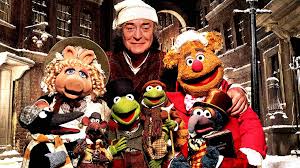 The Muppet Christmas Carol (1992) – in spite of Michael Caine’s appalling singing voice, this remains the best adaptation of this story. The songs are catchy and fun, as is the blend of human and muppet characters (all of the favourites from the TV series make an appearance) and the film benefits from Miss Piggy having the least screen time of any of her appearances. Genuinely funny and spine tingling in equal measures and a must see every Christmas Eve.

 The Apprentice 2016 Week 11 – Interviews
 With each passing week it gets harder to identify who will eventually triumph in this year’s The Apprentice. This is not because of the high calibre of the candidates, but rather because at different times, each one has a good claim to be the most incompetent. It reminds me of a whodunnit, where the murderer is hidden in plain sight but you’ll never guess who it is. It will probably turn out that the butler did it!
 markdecosemo.com