Films of my life – 1965

Films of my life – 1965

I have to be honest and say that 1965 is not a vintage year. That said, it did produce 2 of my all time favourite films and enough quality to fill a weekend of binge viewing.

I have no real memories of 1965 (I was 2 in the October of that year), so again, the films I like were mostly discovered on TV. One or two should be on telly more often (“The Hill” for one, in which a wig-less Sean Connery endures bullying and pain in a desert military prison ) and others, such as the sumptuous Doctor Zhivago have become staples of holiday viewing (there is nothing better than watching this movie on a snowy day at Christmas).

Ipcress File

The Ipcress File – the “anti-establishment Bond”

Notable releases this year were “Thunderball” (Connery’s Underwater-Bond, complete with wig). In fact, it was a big year for spy movies, with the first movie version of a John Le Carré  book – “The Spy Who Came In From The Cold” with Richard Burton. This was a grittier, humourless spy movie, much more real-life and bleak. Very much a product of the Cold War. Similarly, one of my 2 favourite movies from this year, was an antidote to Bond, but this one was produced by Harry Saltzman, one of the Bond producers! “The Ipcress File” starring Michael Caine as Harry Palmer has lot of the grit of Le Carré, but author Len Deighton added in 2 elements that make it even more appealing; Palmer is a working class spy and he has a real attitude; if Bond is establishment, then Palmer is the very definition of anti-establishment. As such, the character tapped into the blossoming youth culture and “kitchen sink dramas” from a few years previously. The fact that it is set at the dawn of “swinging London” gives it an added sense of time and place. Then there is the outstanding score (by another Bond veteran, John Barry). Check out the main theme, it is sublime!

I have to say that every time I come across this movie on TV, I can’t resist watching it.

Other top movies released in 1965:

  • For a Few Dollars More
  • Help (good soundtrack, not as good a movie as “A Hard Day’s Night”
  • Dr Who and the Daleks (Peter Cushing[!], Technicolour Daleks[!])
  • Ten Little Indians (one of the best Agatha Christie’s, recently done on TV as “And then there were none”)
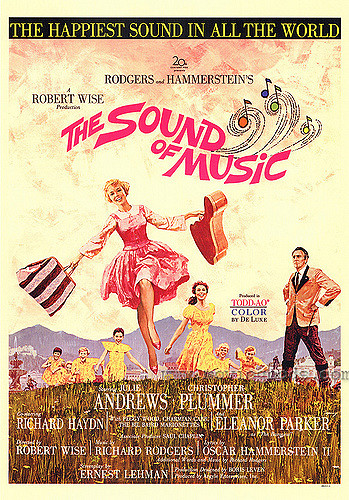
Sound of MusicAs I said, not  a vintage year. However, my other favourite movie of this year also has a great soundtrack, and is still a regular for holiday TV. “The Sound of Music” is hard to resist, with many well known songs (“Climb Every Mountain”, “My Favourite Things”, “Do-Re-Mi” to name but a few) and a surprisingly gritty story. It was another film that I saw for the first time at the cinema, in the mid 1970s at the Queen’s Theatre in 70 mm.


I’m not sure which of these 2 movies I love most, so I’ll choose both of them as my films of the year.

 

Films of my life – 1971

Films of my life – 1971

I am currently making my way through an excellent book called “1971- Never a Dull Moment” in which the author (music journalist David Hepworth) claims this year to be the greatest in rock history. This inspired me to cover the same year for the next entry in this series.

Consett-Empire-Theatre-small

Empire Theatre Consett (courtesy of Consett Magazine) – long before I went there

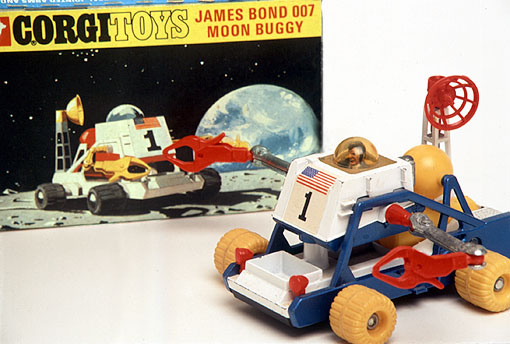
Nineteen seventy one has a real significance for me and my life through movies, as it is the first year I can remember actually going to see movies. Specifically, I remember going to see the James bond flick “Diamonds Are Forever” with my dad at the old Empire Cinema / Theatre in Consett. One of the prevailing memories of watching movies in the 1970s was the poster advertising the movie, with 3 still images and tempting text underneath. To this day, Diamonds are Forever is one of my favourite Bonds, but I suspect more for nostalgic reasons than for it’s quality. DAF, like Goldfinger, had an iconic Corgi toy – the Moon Buggy, and I still remember playing with it at our caravan near Crook.

corgi_moonbuggy_original

Courtesy of 007 Magazine

This was the start of regular, almost weekly trips to the Empire with my dad, and sometimes my uncle David and one of dad’s best friends – Johnny. My abiding memory of these visits was my dad’s annoying habit of just deciding we would go to see a movie. In those days, you could just go in when you wanted, so most of the movies we saw at that time, we came in half way through! We would then stay for the next showing, and dad would try to leave when we reached the part where we arrived. I always refused to leave, and insisted we stay to the end. I especially remember song this with another film released that year – “Escape from the Planet of the Apes” and being totally confused about what was going on (doubly so as this was the 3rd in the “Apes” series, but the first one I saw). To this day, I still hate missing the start of a movie, especially as they now clear the cinema and you can’t just stay for the next showing.

Much as I love DAF, it is not my favourite movie of 1971. Most of the films on the list below I fell in love with years after they were released, usually after seeing them on TV. “Willy Wonka” is a great example of this. I love this version of the Roald Dahl story.

Here is my list of runners-up (in no particular order)

  • Get Carter (Michael Cane as the least likely returning Geordie)
  • Straw Dogs (infamous rape scene)
  • The French Connection (great car chase, and very gritty)
  • Bed knobs & Broomsticks (the mixed animation / real life football match)
  • Dirty Harry (“You feeling’ lucky, punk?” iconic 1970s cop, originally written for Frank Sinatra)
  • Walkabout (Jenny Agutter nude was a staple of 1970s movie viewing)
  • McCabe & Mrs Miller
  • A Clockwork Orange (banned until after Kubrick’s death in 1999, due to the violence it inspired)
  • The Last Picture Show
  • Willy Wonka
  • Diamonds Are Forever


AStrainposterMy favourite movie of 1971 was another in Michael Crichton’s repertoire of warnings about  science and technology going wrong (he also wrote Westworld, soon to be remade as a TV series, and Jurassic Park). This film is almost documentary like, but many of the images are truly terrifying, especially the walk through the tiny village wiped out by a virus. The climax is one of the most tense ever, as the scientists race against a countdown that will result in the  destruction of the lab they are in, designed to contain any breach of infection. This has been repeated many times in movies, most notable in Alien (1979) and Aliens (1986), but it was never done better than here.

It is also important to put this movie into the context of the time it was made; this was the height of the cold war and fear of biological warfare was very prominent in the minds of the pubic.

Andromeda Strain

The Andromeda Strain – my favourite movie of 1971

Quite simply, The Andromeda Strain is one of the best science fiction movies of all time.


Films of my life – 1975

“1975 is one of my favourite movie years. Not all of the movies were great, but the memories certainly were”

Films of my life – 1975

What a year! This is the year when I remember becoming more “independent” in my movie habits. Not as in seeing more independent rather than mainstream Hollywood movies, but in being able to go to the cinema without my parents.

At this time I was growing up in Gateshead, and most of the movies I saw were shown at the Classic Cinema in Low Fell. I used to go with my Three Amigos – Tessa, Andy & Sean

Classic Cinema

Title: Classic Cinema, Durham Road, Low Fell Courtesy of: Photographer: Manders, Frank Date: 28/7/1977 iSee Gateshead Old Photographs Ref: GL001191

and the certificates in those days were;

  • U (universal, same as today)
  • A (a bit like today’s PG, but many cinema’s would not allow children to see movies on an evening, without an adult, especially for popular films)
  • AA – like a 15
  • X – like an 18

I remember trying to go and see “The Towering Inferno” in 1974 with my mates, and getting turned away from a evening show, despite queuing for 30 minutes!

So what were my favourite movies of 1975? Well, I got to see my first AA (despite being 11) when we got into “Tommy”. I barely enjoyed the film on that occasion as I kept expecting the police to come in and arrest us for being under age! I have to say, Tommy is still one of my favourite movies, a crazy mix of a great album from The Who and the trippy visuals of Ken Russell.

The following week, I tried to get into “Rollerball” and failed. After several failed attempts I eventually got to see it in 70mm at the Queen’s Cinema in Newcastle (with a giant curved screen) about 2 years later! It is still one of my favourite movies of any year.

large

courtesy of cinematreasures.org Queens Cinerama Theatre


Here are my favourite movies of 1975

  1. Jaws
  2. Rollerball
  3. Tommy
  4. One FlewOver the Cuckoo’s Nest (Jack Nicholson classic)
  5. Three Days of the Condor (classic 1970s conspiracy flick)
  6. Picnic at Hanging Rock (spooky Australian mystery)
  7. Barry Lyndon (Kubrick does Thackeray)
  8. Dog Day Afternoon
  9. Monty Python and the Holy Grail (which everyone my age could quote)
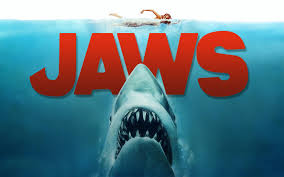
Jaws

one of the most famous movie posters in history

Jaws confirmed my love of cinema. It came out on boxing Day 1975, 6 months after taking the USA by storm. I remember the hype and build up (done in a very 1970s under stated way). There were jigsaws,  an advert for Tudor crisps and the original book and the soundtrack with that theme (Da dum Daa dum). In the days before the internet, building the buzz was a long drawn out affair.

I got to see Jaws over the Christmas holiday. It was showing at the ABC Haymarket in Newcastle, and there were queues for every showing. If you wanted to see it in the first week, you had to queue for up to 2 hours. I went with my friend Dave, who’s dad was best friends with Sandy, the concierge. We walked to the front of the queue and got in first. Just like we were VIPs, though we did pay!

My abiding memories of watching the film were;

  1. I’ve never seen anything like this
  2. Seeing a fat woman in the row in front of us scream and throw her large box of popcorn all over her and us when that head comes out of the bottom of the boat. Simply magic.

1975 is one of my favourite movie years. Not all of the movies were great, but the memories certainly were

Labour (Leadership) Pains

Labour (Leadership) Pains

This lack of cohesion and alignment in philosophy and values is not that far from the mix that seems to have led to the aborted coup in Turkey last week

Jeremy Corbyn

Jeremy Corbyn

So, today the battle for the soul of the Labour party really begins. We now know that there will be only one challenger to the current leader Jeremy Corbyn, and that is Owen Smith.

Corbyn has been leader for less than a year, and his ascendancy to the role signalled a clear shift to the left for the Labour Party. Despite gaining more than 60% of the votes in last year’s leadership contest, Corbyn has failed to establish his credentials with the Parliamentary Labour Party (or MPs to you and I). Over 80% of MPs recently expressed no confidence in their leader, resulting in the upcoming leadership contest. Why is this? The key to the answer is in that “clear shift to the left”.  For many Labour MPs elected in or inspired by “New Labour” and the Blair Labour Government, this shift challenges their beliefs and, even the identity of the Labour Party. For all sitting Labour MPs the contest is not just for leader of the Labour Party. but for the very soul of the party.

For all sitting Labour MPs the contest is not just for leader of the Labour Party. but for the very soul of the party

It is worth remembering that the Labour party tried to go down this route once before. At the height of the Thatcher government in the early 1980s, the Labour leader was Michael Foot. His political beliefs were not that different to those of Jeremy Corbyn, and once again the Labour Party was solidly left wing. This resulted in a group of more centralist Labour MPs breaking away and forming the Social Democratic Party (SDP). After failing to gain any real traction on their own, the SDP amalgamated with the Liberal Party to form the Liberal Democrats. It is not difficult to imagine history repeating itself, if the “centralist” coup should fail.

By the 1990s, after a sustained period of being unelectable, the extreme left wing of the party (Militant) was banished and the party moved back to the centre-left under Blair. Their new identity built around social mobility and aspiration won over traditional Tory voters (as it was not that different from centre-right or liberal-conservatism). Labour won 3 elections with the Blairite approach.

But what of the left wing? Well, like Sauron in “Lord of The Rings”, they never really went away, just bided their time and re-built. And as we know, they resumed control of the party last year.

If the recent EU referendum has taught us anything, it has taught us not to be too certain in predicting anything where voting is concerned

Owen Smith

Owen Smith

This has resulted in a minority of left wing Labour MPs with hard core socialist views leading a group of MPs who are predominantly centre-left (Blairite) in beliefs. This lack of cohesion and alignment in philosophy and values is not that far from the mix that seems to have led to the aborted coup in Turkey last week. A different arena, and different political issues and, thankfully, a different approach to the solution, but be in no doubt, the result of this leadership challenge will have repercussions for the Labour Party and its aspirations to be in government. If a left wing, socialist Labour Party couldn’t get elected at the height of Thatcherism, is it more electable now? If the recent EU referendum has taught us anything, it has taught us not to be too certain in predicting anything where voting is concerned

What May the future hold?

What May the future hold?

Theresa MayToday (July 13th 2017) The UK has a new Prime Minister. Theresa May has emerged as PM after the recent bloodletting in the Conservative party following the EU referendum.
It’s worth reflecting on the last few weeks in British politics. Now I know this has been done by many people in many ways, but I’m interested in looking at these events from a leadership perspective.

In this blog post, I will focus on the events in the Conservative party. Who is our new PM and what are her values? I will look at the Labour party in a separate post.

By definition, leadership is about persuading people to follow you. There is a debate about how our next PM was decided upon. In the end, May was the last woman standing, as previous candidates to lead the Conservative party fell by the wayside, either through their own choice or that of their party. So, actually, nobody has directly chosen May to be PM. That said, it is within the constitution and May feels she has sufficient mandate that she has stated she does not feel the need to call a general election to get one. Although May made a speech on Monday outlining her philosophy, nobody actually voted for it! All of this presents May with her first challenge; how to inspire people to follow her.

UK politics has undergone a seismic shift over the last few years

A profile in The Guardian describes May as “unpredictable and moralistic”. She  is also seen as a detail person and someone who struggles to delegate. Think micromanagement. This attention to detail is going to be important going forward, especially in leading the negotiations for “Brexit”. Don’t be surprised if May takes her time in appointing the cabinet; in common with many politicians, she displays the cautious low emoting analytical style. Relatively risk-averse, it is more important to get it right than it is to get it done quickly. In social types terms, May is definitely more task focused than people focused. She is described as hard to get to know, sharing little personal information. She is not interested in gossip. This could be either the driving style or analytical style. It is the measured delivery and softer tones that suggest the latter for me.

May has also given us some insights into her values.  One  analysis  reviewed her only campaign speech, last Monday, just before here last rival, Andrea Leadsom, dropped out of the contest. Three themes emerged;

  1. to govern for “everyone, not just the privileged few”
  2. to unite the party and the country
  3. to negotiate EU withdrawal successfully

All 3 points highlight May’s priorities, but it is point 1 that gives the most insight into her values. May is a believer in “One-Nation Conservatism”and point one is an effective definition of what that is. It will be interesting to see how this belief is translated into action, and this is vital if she is to meet the aspirations of points 2 and 3.

UK politics has undergone a seismic shift over the last few years. The surprise with which the Brexit win was received confirmed that large parts of the population have become disillusioned with the norm or the “establishment”. It started with the rise of UKIP and the coincidental fall of the labour party since 2010. This led to the first peace time coalition government in generations. Labour responded by moving more to the left. The two leading political parties are further apart in their philosophies than they have been for 40 years. In the 1990s they competed for the centre ground. Now, they fight from the flanks.

UKIP was mistakenly believed to appeal only to the right, but their rise in the last election and the success of Brexit (their only policy) has shown that actually they really appeal to frustrated blue collar workers in rural and northern areas, as well as the more hardline right.

If Theresa May is to unite the country, the government she leads will have to negotiate these shark infested waters. She appears to want to step into the void that was vacated by labour (the centre ground) but this will put her at odds with her own party.

Here is her first speech as PM

In the next part of this discussion, I will look at what is happening on the left, and how the civil war currently being fought in the Labour party will almost certainly see the party split in 2.

Films of my life – 1984

“So, what is my favourite movie of 1984?  I’ve chosen possibly the greatest concert movie of all time -Jonathan Demme’s  film of Talking Heads in concert – “Stop Making Sense”.

Welcome to my blog, where I reflect on different years of my life through the films released in that year.

Having previously covered the first 2 years of my life, this post looks at 1984 – one of my favourite “film” years and a significant year in my life, as it was when I first met my wife, Gill.

In researching this year, it was immediately apparent that by the 1980s far more films were in production. That said, 1984 was an especially bumper year and some great movies were released. Here are a few that stand out:

  • Ghostbusters
  • Gremlins
  • Amadeus
  • Dune
  • Splash
  • This is Spinal Tap
  • Purple Rain
  • The Terminator
  • A Passage to India
  • The Killing Fields
  • Karate Kid
  • Romancing the Stone
  • Once Upon a Time in America
  • Beverley Hills Cop
  • Indian Jones and the Temple of Doom
  • Tightrope
  • 1984

GhostbustersPhew! What a list. Many of those fils are favourites of mine; Comedies like Ghostbusters, Gremlins, Spinal Tap and Beverley Hills Cop; Adventure movies such as Temple of Doom and the Indiana Jones-light “Romancing the Stone” and Karate Kid; “Once Upon a Time in America” – Sergio Leone’s last and possible greatest movie, doing for the gangster movie what he did for the Western with “The Good, the Bad and the Ugly”. The post-Vietnam war movie “The Killing fields” was a very affecting watch.
“Amadeus” has a special mention, as on the evening all of our student house went to see it we discovered a tiny kitten upon our return. We called it “Amadeus” (of course) but that only lasted a few weeks before we re-named him after one of our best friends – “George”. George went on to live with Gill and I, my family and eventually, Gill’s brother , Nigel.

stopmakingsense-1080x675So, what is my favourite movie of 1984?  I’ve chosen possibly the greatest concert movie of all time -Jonathan Demme’s  film of Talking Heads in concert – “Stop Making Sense”.

What I like about this movie is the concert itself is centre stage. The filming is very straight forward, because the amazing set and stage settings carry the film. This is a band at the peak of it’s powers, delivering their greatest hits in an unjust way – no shots of the audience, just the band, their music, David suits and great lighting.

Favourite scene

The concert and movie opens with David Byrne walking out to a empty stage, placing a ghetto blaster on the floor and playing an acoustic version of “Psycho Killer” whilst the stage is set around him.

Check it out


Films of My Life – 1964

clapperboardThis blog charts my life through the films I love. Each post focuses on one year of my life and I choose my favourite film from that year.
In this post we are looking at 1964 – my first full year of life and probably best remembered for Beatlemania. In fact my mother always said that my first word was “Yeah” after the Beatle hit “She Loves You (Yeah, Yeah, Yeah)”. The Beatles capped this year of mega popularity with a movie of their own – “A Hard Day’s Night”. It’s a good movie, but not my favourite for that year.

“There were some absolute crackers released in 1964, and I found it hard to choose a favourite”

Again, I have to say that, of course, I was too young to remember seeing any movies in 1964 – my film memories of that year are based on movies I have seen subsequently, some may years after their release.

There were some absolute crackers released in 1964, and I found it hard to choose a favourite. Here are some of the other contenders; all great movies and anyone could have been my movie of the year;

  • Dr Strangelove – Kubrick’s satire on nuclear war, with outstanding performances (3) from Peter Sellers.
  • Fail-Safe – Dr Strangelove without the laughs. Truly terrifying
  • Marnie – Probably Hitchcock’s last great movie
  • Zulu – another bank holiday favourite
  • Mary Poppins – Probably my all time favourite Disney movie, with memorable songs and dodgy accents
  • A Shot In The Dark – more Pink Panther frolics, this time written by the man who would go on to write The Exorcist (William Peter Blatty)
  • A Fistful of Dollars – The first of the Leone “Man With No Name” trilogy

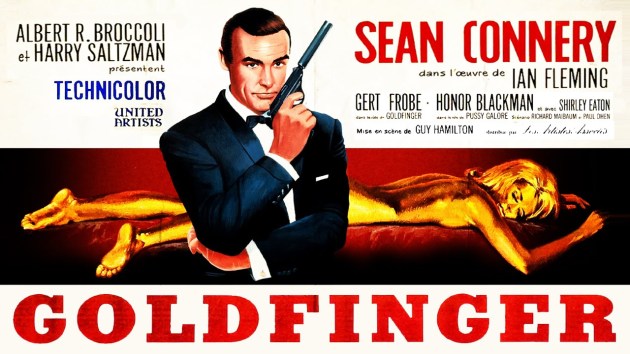
GoldfingerMy favourite movie of 1964 is “Goldfinger”. The third of the Bond series set the template for the next 30 years, until Daniel Craig took the role. Humour, gadgets (the (souped up Aston Martin DB5), great sets (Ken Adam imagining what the inside of Fort Knox might look like), a megalomaniac villain with a bonkers plan  (played by Gert Froebe, but dubbed throughout) and best of all – an outstanding score by John Barry and THAT title song, sung by Shirley Bassey.

I managed to see all of the Bond movies in the cinema. Bond movies didn’t make it onto TV until the late 1970s. Throughout the 1970s, they were often re-released as double headers, sometimes for only 3 or 4 days, which meant that some weeks I could see 4 Bond movies at the Classic cinema in Low Fell, or the Studios in Newcastle!

The first time I saw “Goldfinger”, I persuaded my cousin, Nigel Filby, to take me one Sunday afternoon, when his family were visiting us. The deal was that he kept the money we were given for sweets (which he used to buy fags). I didn’t care, I just wanted to see the movies!

1964_Corgi_Aston_Martin_DB5My other abiding memory of “Goldfinger” was having the Corgi replica of the Aston Martin (I think every young lad, and many lasses, had that car, with its working ejector seat). I had the car for so long before I got to see the movie, I remember that when  I did see it, I was amazed that it was silver -not gold like the toy!
In my opinion Goldfinger is not the best Bond (O.H.M.S.S. and Casino Royale are better) but it is the most famous. Connery was never better and the film was the top grossing movie of 1964. It also led to a plethora of copycat productions, from “Man from U.N.C.L.E.” and “Mission: Impossible” on TV to “Our Man Flint” in cinemas

Yes, 1964 was a great year for Britain – it started with Beatlemania and ended with Bondmania.


Films of my life – 1963


“I say attend, actually I didn’t see the movie, as my mother was pregnant with me and she went to see it!”

clapperboardWelcome to my blog! Each week I will be reviewing the movies released in a particular year of my life and identifying my favourite movie from that year.

It makes sense to start this journey with the year of my birth. My first cinema experience, and one that may explain my love of movies, was “attending” a showing of the Bond movie “From Russia With Love”. I say attend, actually I didn’t see the movie, as my mother was pregnant with me and she went to see it!

“From Russia With Love” is a favourite movie and one of the best Bond’s, but it is not my film of the year. Other contenders (obviously all seen later in life) include the following classics;

  • The Birds (Hitchcock classic)
  • Jason & the Argonauts (Iconic sword & sandals from Ray Harryhausen )
  • Its A Mad, Mad, Mad, Mad World (the very definition of madcap)
  • The Pink Panther (introducing Peter Sellers as Inspector Clouseau)
  • 81/2 (Fellini classic that I only saw for the first time in 2015)
  • Disney’s The Incredible Journey (household pets are lost and trying to get back home)
  • The Nutty Professor (as a child, I thought it was funny)
  • Move Over Darling (Doris Day and Rock Hudson (!) in a romantic comedy which is far funnier than I thought as a child)

Great EscapeNo,  my choice for 1963 is “The Great Escape”, a perennial bank holiday movie from my youth with a great true(ish) story, superb cast (Steve McQueen – “Cooler King”; Dicky Attenborough, James Garner, Donald Pleasence to name but a few) and one of the most familiar and iconic themes. I actually played the theme (badly) as part of my brief flirtation with the clarinet, playing in the St Cuthbert’s Grammar School Band in 1975-76.

I actually played the theme (badly) as part of my brief flirtation with the clarinet,

Why did I choose this movie over the others I mentioned? It is probably one of the best war movies and I was born at the tale end of the post-war baby boomer era (apparently it ended in 1964). As such,  we  grew up nourished on stories from the second world war, both those told by our families (Uncle Billy worked as a translator, possibly for British Intelligence during the war) and in the plethora of movies on the TV. Remember, this was in the era before video or DVD, when movies could only be seen by live transmission – at the cinema or on TV. So, I grew up on the heroism of WWII, playing “Japs and English” (I know, not PC).

Directed by John Sturges, The Great Escape is similar in tone and style to his previous movie “The Magnificent Seven”. It also includes 3 stars from that movie; McQueen, Charles Bronson and James Coburn. The contrast between the stiff upper lip and formality of the Brits and the more laid-back approach of the Yanks (James Garner as Hendley “The Scrounger” is particularly good fun).

Although it is remembered as light hearted, the ending of the film is bitter-sweet, as not everyone gets out. That said, the various storylines are beautifully played.

All in all, the perfect movie for a wet bank holiday.

Best Scene

Steve McQueen on a motorbike! Apparently it was not based on a real event, but was added in at the actor’s request!

What do you think of “The Great Escape”?


The Apprentice 2015 – The Final

The Apprentice 2015 – The Final

Your firedIn the end, the Apprentice 2015 came down to a battle between the traditional and the new to acquire Lord Sugar as a business partner; either plumber Joseph Valente or dating app developer Varna Koutsomitis. To help Sugar make the decision, each finalist was asked to develop a digital billboard advert and promotional video before pitching their idea to a selected audience. They were assisted by a motley selection of 2015 ghosts of candidates past.

The two finalists seemed to adopt different strategies for selecting their teams; Varna prioritised going with individuals that she respected rather than liked (such as Richard Wood) selecting individuals with a good track record, whereas Joseph went with his mates, choosing relationships over past success. It didn’t seem to make too much of a difference, as it was obvious that neither candidate had a fully formed business strategy going into the final.

For Varna, the challenge was to persuade Lord Sugar to invest in a business that could be seen as speculative (there are apparently 15 new dating apps per week, and 15 failures) where the prize money could disappear within the first few weeks. Joseph wanted to transform his successful local business (in Peterborough) into a national brand. To do this he would need to identify a USP.

The promotional videos strayed into familiar territory. The addition of a juggling metaphor transformed what could have been a very traditional dating site advert into something resembling Cirque Du Soleil. Joseph only just avoided producing “Confessions of a Plumber’s Mate”. Neither was particularly inspiring. The issue was trying to get the essence of the brand each team was trying to sell. For Varna there was the challenge of selling the scientific profiling in the form of gaming. Joseph had based his idea on the “green” revolution, but was informed by focus group that this was not going to make money for the next 15 years (in a subtle dig at government policy). Credit to him, though, he latched onto the idea of investing in smart phone technology to control central heating and shifted his proposal accordingly. In doing so, he actually made the final a battle of the apps, at least on one level. Similarly, Varna realised from her focus group that the thorny issue of funding was not going to go away. She also repositioned her pitch to be an initial investment to prove her unique idea could win and use this to attract further venture capital.

Back in the boardroom with adverts, videos and pitches completed and past candidates dispensed with, it was decision time for Lord Sugar. It was here that Joseph played his trump card; he cited Sugar’s autobiography as a major inspiration and reminded him that he also came from humble roots. In other words, he showed Sugar how alike they are. It is true that Joseph has grown and evolved across the series, even down to his appearance. He has also shown himself as being prepared to listen and learn, two traits that Sugar values. Joseph was also able to dangle the carrot that a rival business in London had grown to a multimillion pound business.

Varna on the other hand has grown less through the process, having started from a high base. She remained focused and confident, with good knowledge of her business area. However, here business plan represented a riskier proposition.

p033wp3p

And the winner is…Joseph. Photo courtesy of BBC

In the end, Joseph and his plumbing business were the safer option.  To choose Varna, Sugar would have to speculate on new product that is untested and, crucially, he would not have control over unless he added significant extra funding. This fact, coupled to Joseph playing the “I’m just like you” card (Sugar’s achilles heal) secured the win. Sugar is going into the plumbing business.

It is interesting to note that Joseph represents the 5th business partner that Lord Sugar has taken on as a result of the revised format for The Apprentice. I remain unconvinced that this is the best format (see my earlier posts) and I am critical of the candidate selection this year, where good TV is more important than business credibility. I really hope that the production team give the format a real overhaul before series 12 next year. That said, good luck to Joseph Valence and his plumber’s mate, Lord Sugar.


The Apprentice 2015 Week 11 -Fail to plan and you plan to fail

The Apprentice 2015 Week 11 -Fail to plan and you plan to fail

The final of the Apprentice 2015 will be between social media entrepreneur Varna Koutsomitis and plumbing business owner Joseph Valente. The remaining three candidates were eliminated at the interview stage.

In the end, it comes down to the quality of the business plan; how well you sell it and how well it fits with Lord Sugar’s preferences. The truth is, however, that the semi-final makes a mockery of the previous 10 weeks.

p033wn8p-2

Varna will be in Sunday’s final. Photo courtesy of BBC

Take marketing agency director Richard Woods, for instance. He was many people’s favourite to win the series, as he had been on the winning team 8 times, twice as project manager. In the old format of the series, he would have been the perfect employee. Except he probably wouldn’t apply as he already runs his own business. Richard has played a shrewd game, keeping his cards close to his chest; just enough of a team player but always preferring his own judgement. I suspect there are as many viewers who hate him as like him, because there was something quite incongruent, bordering on manipulative, in his approach. For some, it will be fitting that it was this, and not the quality of plan, that ultimately cost him. Richard chose not to reveal that his plan for a marketing agency for Small and Medium Enterprises (SMEs) is a duplicate of his existing business. This could be seen as justice or even a vindication of the process.

Hairdresser Charleine Wain had a plan to turn her hair and beauty salon in to a franchise. Much as she impressed the panel with her work ethic (and I admit that I’ve grown to like her) it showed a naivety in business terms; you can’t  franchise until you have made a name. Sugar may be a big name, but he is not associated with hairdressing.

For Mr Corporate, Gary Poulton, his idea of a virtual meeting space for events confused Sugar and didn’t convince the panel.

Isn’t this just Skype?” asked Karren

So, Gary failed to sell his idea.

Varna is wanting to design a new dating / gaming app and though she was convincing, there is a nagging concern that she has underestimated the start-up costs.

p033wp3p

Varna will be in Sunday’s final. Photo courtesy of BBC

Joining Varna in the final is Joseph Valente. His plan to expand his plumbing business was realistic and, crucially, tangible. Sugar made his name in manufacturing, and he seems to err towards propositions that make things or at least involve real things. He has surprised us (Ricky Martin’s recruitment business proposal) in the past, but Joseph did a great job of selling his plan with passion and realism. Crucially, he has learned from the feedback he received on the property task, and he changed his appearance by shaving off his moustache. This visible sign said “I’ve leaned in this process” and was noted by Sugar.

So the choice this year is between a new app and a plumbing business. Who knows what better plans belonging to fired candidates may have been missed, and this is my main criticism of the series?

Who will win? Who cares! The whole thing has been rendered irrelevant and the format needs to be re-thought. There is a case for starting the series with the interview panel and identifying 12 business plans that are viable and that Sugar would invest in. Then the weekly contests have relevance, as the candidates are reduced to a single winner with a viable plan.